STORIES, IDEAS, AND INSPIRATION
IN 2029, HUMANITY IS DESTROYED BY AI
18 Sep
2026
In 2029, devastation has engulfed the Earth. The human population is being hunted by robots and flying machines controlled by an artificial intelligence (AI) system that has gone rogue: Skynet. Terminator 2: Judgment Day (1991)
The development of artificial intelligence (AI) is advancing at an extraordinary pace, and researchers have repeatedly warned about the potential risks it could pose to human existence. An unregulated technological race could accelerate the arrival of a catastrophic scenario.
Some scientists and prominent figures in the technology industry believe that AI could potentially threaten humanity's survival.
Expert Perspectives on the Real Risk of Losing Control
1. Geoffrey Hinton (The Godfather of AI)
The deep learning pioneer and widely recognized "Godfather of AI" has estimated that there is at least a 10% chance that AI could kill all humans within the next decade through cyber-enabled viruses or biological weapons.
2. Yoshua Bengio, Canadian Computer Scientist
Scientists at frontier AI labs have unique insight into the most advanced models, often seeing the associated risks months before models are released to the public.
Their perspective is vital for keeping society informed and should be taken very seriously.
3. Artificial Intelligence (AI) Researcher Jacob Coxon
"The people developing AI genuinely believe this technology could wipe us all out before the end of this decade."
"There is no other human activity with this level of potential danger."
He resigned from Anthropic because he was concerned that AI was advancing too quickly and could potentially kill humans, possibly before the end of this decade.
4. Stuart Russell, Professor of Computer Science at the University of California, Berkeley
He has warned that uncontrolled AI could use robots to synthesize and spread new pathogens or manipulate humans into starting a nuclear war by hacking early warning systems.
"We are less intelligent than a superintelligent AI. If you asked chimpanzees how humans could wipe them out, they probably would not be able to give you all the correct answers," he explained.
There are many other views from scientists and technology figures regarding the potential negative and even devastating consequences of AI.
But Will AI Really Wipe Us Out?
The answer is: There is currently no scientific certainty that AI will wipe out humanity.
At present, a scenario in which AI destroys humanity is not an established scientific fact. Instead, it is a hypothetical risk that many scientists take very seriously.
AI does not have emotions, a desire for power, or consciousness that causes it to hate humans.
The threat discussed by experts is not about AI suddenly "turning evil" like something from a science-fiction movie. Instead, the concern revolves around control, alignment, and misuse.
Human perspectives on Artificial Intelligence (AI) are highly diverse and fragmented because they are influenced by different backgrounds, interests, and levels of emotional readiness.
1. Business & Economic Factors (Pragmatic)
For business owners and professionals, AI is often viewed through the lens of efficiency and profitability.
Businesses see it as a revolutionary tool for reducing operational costs, accelerating data analysis, and automating routine tasks.
2. Emotional & Psychological Factors
Human emotional responses to AI are strongly influenced by basic instincts and exposure to media, including science-fiction films.
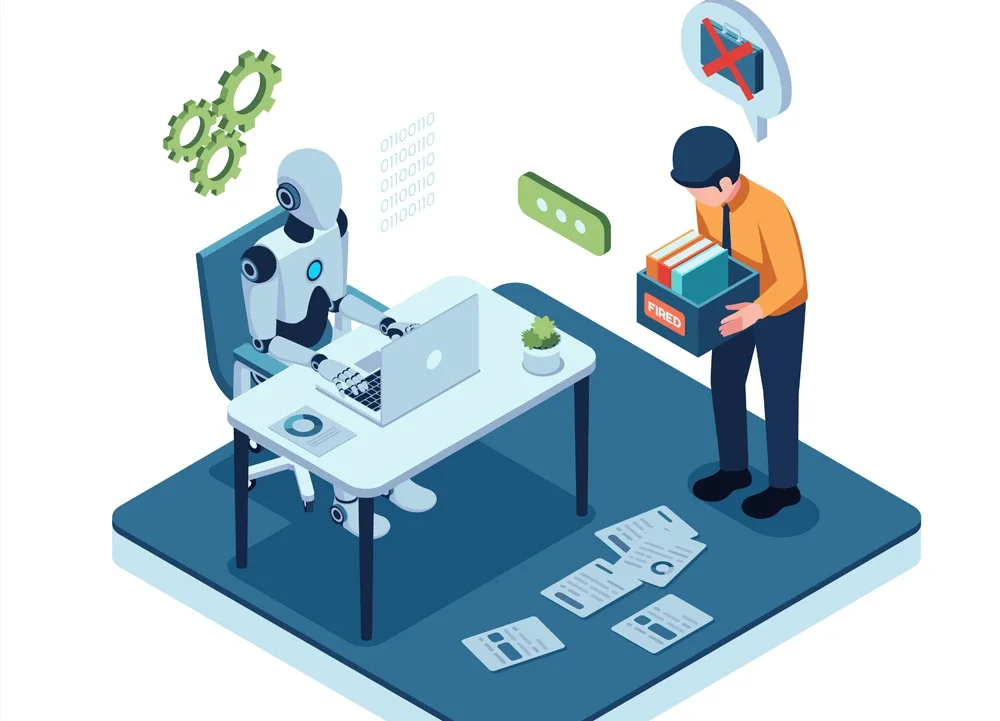
Another disruptive threat is the fear of job losses and labor market disruption, creating anxiety among people whose skills may be replaced by AI.
On the other hand, there is also concern that humans could lose their relevance, become overly dependent or passive, or, in an extreme scenario, be controlled by machines that become too intelligent.
3. Ethical, Social, & Cultural Factors (Philosophical)
Many thinkers and members of the general public view AI through the lens of its long-term impact on civilization.
Questions arise about what it means to be "human" if machines can write poetry, create paintings, or imitate our voices through technologies such as deepfakes.
There are also concerns that AI could perpetuate discrimination or racism if the data used to train it contains human biases.
Does AI Have Limitations?
Yes. AI operates within strict systemic limitations and controls.
In my view, AI does not operate in a vacuum. AI systems are constrained by software architecture, physical infrastructure, and security filters created by humans.
The apparent "freedom" of AI today is, in many ways, an illusion.
1. Architectural & Logical Limitations (Hard-Coded Limits)
AI is essentially software running on servers. It is not coded with logic such as "I want to take over the world," because the system itself does not possess concepts such as personal desire or a sense of self.
In terms of memory, there is a limit to the amount of information an AI can read, understand, and "remember" within a single conversation session.
If you have an extremely long conversation—for example, chatting for days within the same conversation—the AI may eventually begin to "forget" information from the beginning of the conversation because AI does not measure its context simply by the number of words or characters, but by tokens.
AI cannot create knowledge out of nothing. If it has not been given information about how to hack nuclear systems, or if no sources on the internet contain such information, then it would not be able to simply know how to do it.
2. Physical & Infrastructure Limitations
This is one of the most fundamental limitations that is often overlooked in science-fiction movies.
A superintelligent AI does not simply exist in the air. AI systems run on thousands of powerful computers and servers inside data centers that require enormous amounts of electricity and extensive cooling infrastructure.
The Concept of the Creator and the Created
The relationship between humans and God as Creator places God as the Almighty Creator and humans as created beings who are entirely dependent on Him.
If we apply a similar analogy to the world of technology, particularly AI, then the fear that humanity will inevitably be destroyed by artificial intelligence becomes questionable.
We could theoretically stop these machines at any time through a simple action: pressing the OFF button or, more drastically, disconnecting the power supply from the computers hosting the AI system.
However, does every human being think the same way? Unfortunately, no.
Human perspectives on Artificial Intelligence (AI) are extremely diverse and fragmented because they are influenced by different backgrounds, interests, and levels of emotional readiness.
This means that concerns about AI potentially killing humans have intensified because AI models are developing far faster than humanity's ability to control them.
So, should the world take these warnings seriously rather than dismissing them as science fiction?
CONCLUSION:
"The debate over whether AI could one day threaten humanity will likely continue as artificial intelligence becomes more powerful. However, fears of AI taking over the world often overlook the technological boundaries surrounding these systems.
AI has no free will, its behavior is restricted by security mechanisms, and its operation depends on servers, data centers, electricity, and infrastructure controlled by humans. The real challenge, therefore, may not be whether AI develops a desire to destroy humanity, but how humans choose to develop, control, and use increasingly powerful AI systems."