STORIES, IDEAS, AND INSPIRATION
The Digital Operations Dilemma: Rent a VPS or Buy a Dedicated Server?
18 Sep
2026
For an IT professional responsible for Digital Operations, the most nerve-racking moment is not always when a system goes down. Sometimes, it is when you have to sit down with the CFO and justify an infrastructure budget.
The question is almost always the same: "Should we rent an affordable VPS on a monthly basis, or make a larger upfront investment in a physical Dedicated Server?"
In an era where an email server cannot afford even a second of unnecessary delay and operational data storage continues to grow every day, choosing the wrong type of server can lead to wasted budget—or worse, an operational disaster for the company.
As IT professionals working behind the scenes, let us break down this classic dilemma objectively from an IT management perspective, complete with real-world scenarios that frequently arise in day-to-day operations.
Direct Comparison: VPS vs Dedicated Server
| Consideration | Renting a VPS | Dedicated Server |
|---|---|---|
| Upfront Cost (CapEx) | Very low. Typically based on a monthly or annual subscription model. | Very high. Hardware such as the server, rack, and UPS must be purchased upfront. |
| Control & Privacy | Virtually isolated, but the underlying physical hardware is still shared with other users. | 100% full control. The physical server belongs entirely to you and can be hosted in a data center through colocation. |
| Performance & Latency | Generally sufficient for small to medium-scale workloads. There is a risk of noisy neighbor issues if the VPS provider does not manage its infrastructure properly. | Maximum and consistent performance. All resources—including CPU, RAM, and Disk I/O—are dedicated to your organization. |
| Storage Scalability | Easy to upgrade or scale up through the provider's dashboard, often within minutes. | Requires purchasing additional physical hard drives or SSDs and installing them manually in the server. |
| Management (OpEx) | Hardware maintenance is handled by the provider. The internal IT team can focus on the operating system and applications. | The internal IT team is fully responsible for hardware maintenance, networking, electricity, and cooling. |
Email Server Requirements & the "Multi-VPS" Case Study
Business email operations require a clean IP reputation to prevent messages from being flagged as spam. So how do these two options compare?
Renting a VPS is a quick and affordable option at the beginning.
Renting a VPS (Virtual Private Server) often looks extremely affordable at first because many hosting providers use promotional pricing to attract new customers. However, there are often hidden costs that only become apparent later.
Many VPS providers also adjust their rental prices unexpectedly, which can disrupt a company's operational budget planning.
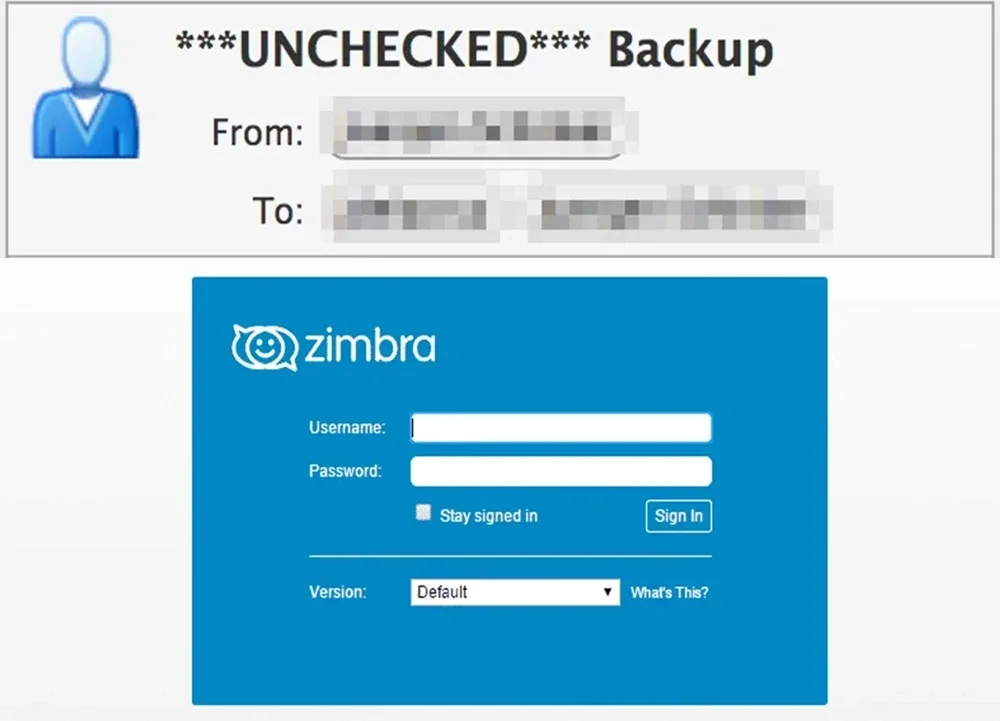
In addition, building a secure email architecture usually requires more than a single VPS. In real-world cases I frequently handle, a company may need to rent two VPS instances at the same time: one VPS dedicated to the Zimbra Email Server, and another VPS acting as a firewall using Proxmox Mail Gateway (PMG) to filter spam and viruses.
This multi-VPS architecture can significantly increase monthly costs while also making infrastructure management more complex.
Choosing a Dedicated Server: the best option for large-scale corporate email.
With a reliable physical Dedicated Server, you can take advantage of virtualization technologies such as Proxmox VE to create multiple Virtual Machines (VMs) within a single server.
You can run Zimbra and PMG on the same physical machine without additional monthly server rental costs.
You also get a dedicated public IP address whose reputation you can manage consistently under your own control.
However, moving directly from a VPS to a Dedicated Server can feel like a major financial leap because the upfront price difference may be five to ten times higher.
Data Storage Requirements & Migration Challenges
Managing sensitive Digital Operations data—including application databases, system logs, and corporate documents—requires careful planning.
The decision between using a VPS and a Dedicated Server is no longer just about price. It also involves data security, regulatory compliance, and full infrastructure control.
VPS: Highly suitable for companies with dynamic data requirements.
If you run out of storage space, you can simply rent additional Block Storage. However, depending heavily on a single provider can expose the business to long-term cost challenges.
On the other hand, one of the risks of shared hardware in a VPS environment is that your data resides on the same physical server as data belonging to hundreds of other users.
Although each environment is virtually isolated, theoretical risks still exist, such as Side-Channel attacks—for example, attacks that exploit CPU vulnerabilities—or situations where another user on the same physical server experiences a massive cyberattack that disrupts the entire hardware platform.
Dedicated Server: Provides maximum security and data sovereignty.
This is one of the safest options for sensitive data. You control an entire physical computer, with no other company's data stored on the same machine. The risk of data leakage caused by another tenant's mistakes is eliminated.
Storage capacity can also become significantly more cost-efficient in the long term when your organization manages terabytes (TB) of data.
The Classic Challenge: Wanting to Move, but Fearing the Migration
When fluctuating VPS prices begin to put pressure on operational budgets, the idea of switching to another open-source alternative or moving to a self-managed Dedicated Server inevitably comes up.
However, the IT team then faces a classic challenge: what happens to massive backups, and how can the migration process be completed smoothly without downtime—ideally achieving zero downtime?
Migrating large volumes of mailbox data and ensuring that post-migration data reconciliation is completed successfully is one of the real tests for an IT Manager. The company's Digital Operations must continue running without interruption throughout the transition.
Recommended Monitoring Tools: Keeping Your Server "Healthy"
Whether you ultimately decide to rent a VPS or purchase your own Dedicated Server, Digital Operations cannot run optimally without tools that monitor server health 24/7.
Here are several recommended server monitoring tools for maintaining email server reliability and storage capacity:
1.Prometheus + Grafana (Best for Customization & Open Source)
This is one of the most popular combinations among SysAdmins. Prometheus collects metrics such as resource usage, CPU temperature, and remaining storage capacity, while Grafana transforms that data into highly interactive visual dashboards.
It is particularly useful for monitoring operational data storage capacity in real time.
2.Zabbix (All-in-One Solution for Complex Infrastructure)
Zabbix is a powerful solution for monitoring networks, physical hardware on Dedicated Servers, and the performance of virtual VPS environments.
You can configure custom alerts. For example, if the email queue in Proxmox Mail Gateway suddenly starts building up or the server IP appears on a spam blacklist, Zabbix can immediately send a notification to your IT team's Telegram or WhatsApp before management even notices the problem.
3.Netdata (Best for Lightweight Real-Time Monitoring)
Netdata is a lightweight monitoring tool that provides per-second monitoring.
It is highly recommended if you choose a VPS with limited specifications because Netdata consumes relatively few server resources while still providing highly detailed visibility into your Zimbra server's Disk I/O and RAM performance.
4.Uptime Kuma (Simplest Option for Uptime Monitoring)
Uptime Kuma is an easy-to-use self-hosted application for monitoring whether your email server's SMTP/IMAP ports or your website are currently up or down.
This tool helps the operations team ensure that critical communication channels remain accessible.
So, When Should You Choose a VPS or a Dedicated Server?
There is no universally wrong option. The real question is which solution best fits your company's current Digital Operations requirements.
Choose to rent a VPS if: Your business is still in the early stages of growth, requires fast implementation and a short time-to-market, and your IT team is prepared to deal with potential pricing fluctuations as well as the complexity of managing multiple VPS instances for a secure email architecture.
Choose to buy a Dedicated Server if: Your company's Digital Operations have reached a larger scale, you need long-term cost stability, you want to consolidate infrastructure such as Zimbra + PMG onto a single machine through virtualization, and you are prepared to invest in careful migration planning and a mature backup strategy to achieve full physical data sovereignty.
CONCLUSION:
When a company decides to move toward Digital Operations, discussions often focus on sophisticated applications, analytics dashboards, or workflow automation. However, as IT professionals, we know that none of those digital capabilities can operate without a solid infrastructure foundation behind them.
Successful Digital Operations are not simply about purchasing expensive software. They are about ensuring that the underlying server resources are capable of supporting the workload. Maintaining a clean email delivery rate and ensuring that storage remains secure and fast are among the most important contributions an IT team can make to the continuity of a modern business.